
What is dry eye in dogs?
Dry eye syndrome in dogs, also known as Keratoconjunctivitis Sicca (KCS), involves decreased or inadequate tear production. Tears are produced by the lacrimal, or tear gland, and the gland of the third eyelid. Tears are needed to provide lubrication and nutrition to the cornea, as well as to remove debris and/or infectious agents from the eye. The tear film is a mixture of mucus, fatty liquid, and water.
Any condition that impairs the ability to produce adequate amounts of tear film can result in dry eye. Some of the common contributing causes of KCS include:
- Immune-mediated diseases that damage the tear-producing glands. This is the most common cause of KCS and is poorly understood. The body's immune system damages the cells that produce a portion of the tear film, resulting in decreased production.
- Infectious disease
- Certain medications
- Prolapsed gland of the third eyelid (cherry eye) and/or removal of the gland of the third eyelid
- Damage to the nerves going to the tear glands (neurogenic KCS)
Certain breeds are more likely to develop KCS, suggesting there is a genetic basis. Commonly affected breeds include the Cavalier King Charles Spaniel, English Bulldog, Lhasa Apso, Pug, Shih Tzu, and West Highland White Terrier. However, regardless of breed, any dog can be affected with KCS.
KCS most commonly affects middle-aged to older dogs.
Written by Dr. Mariella Roberts, Veterinary Surgeon, Animal Trust Vets CIC | Published June 2025 | Review date June 2027 | This advice is for UK pets only and is not a replacement for seeing a vet

Symptoms
Painful, red, and irritated eyes
Squinting, blinking excessively, or holding eyes shut
Discharge, thick, yellowish, mucoid discharge
Non resolving problem of the above two symptoms
Discoloration of the glassy surface of the eye possibly due to scarring of the cornea which may result in reduction of vision
Both eyes are usually affected although one eye may appear worse than the other
When to contact your vet
At the first sign of any visible eye issues. Especially if your dog appears to be in pain or there are visible changes to the eye.
Diagnosis
Diagnosis is based on medical history, clinical signs, and decreased tear production tests. The most common tear production test is the Schirmer tear test (STT). This simple test uses a special paper to measure the amount of tear film produced in one minute. Additional diagnostic tests may include corneal staining to check for corneal ulcers and measurement of the internal pressure of the eye.
How to treat dry eye in dogs
Most cases are treated medically, and the treatment of dry eye has two objectives: to limit further damage to tear glands and stimulate tear production and to artificially replace tear film, thereby protecting the cornea.
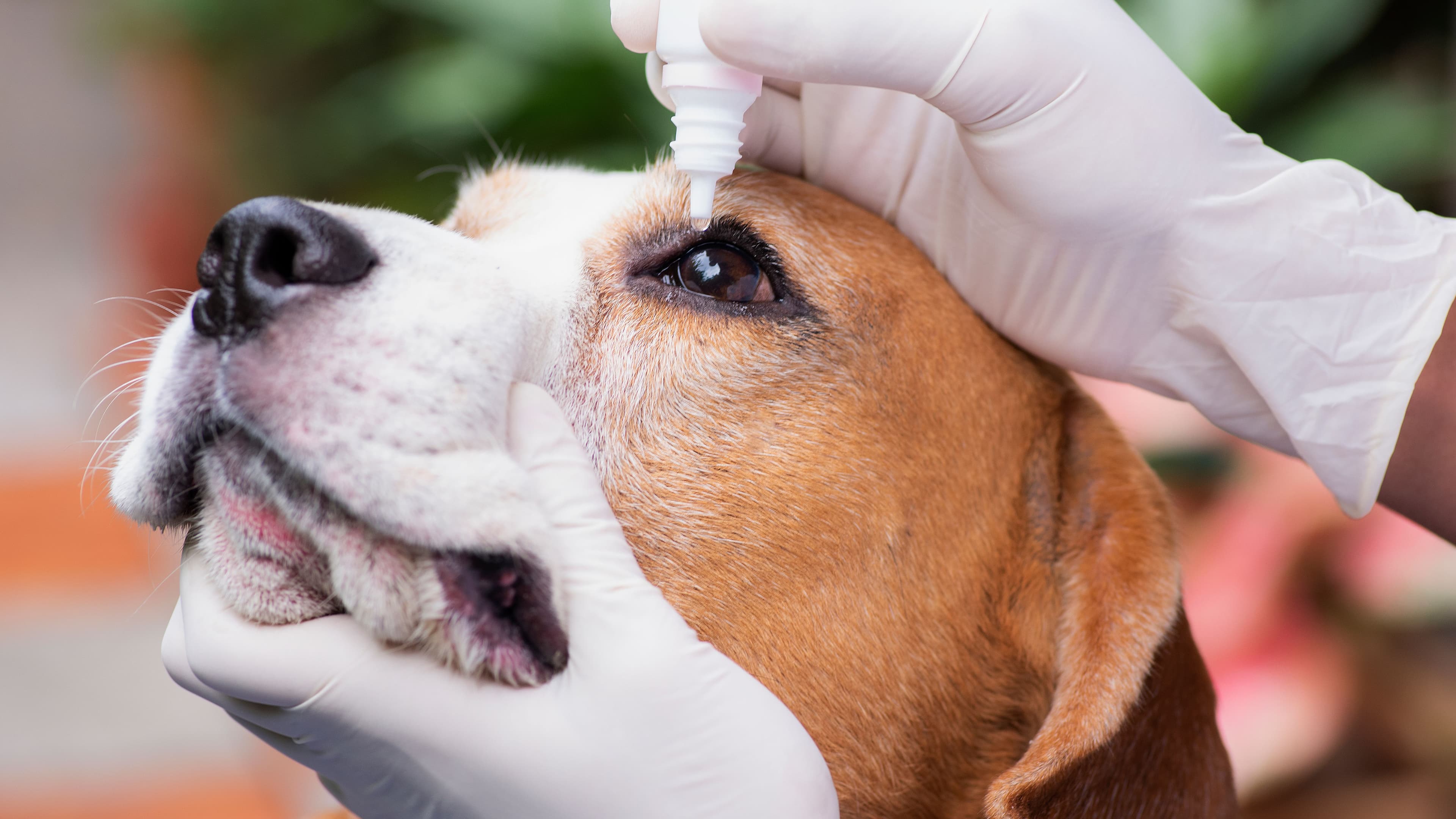
There are two commonly used eye medications to limit further damage and stimulate tear production: Cyclosporine (brand name Optimmune) and Tacrolimus. Both are ointments which are placed in the eyes once or twice daily.
Artificial tear replacement is often used in combination with Cyclosporine or Tacrolimus. This is important to keep the cornea moist and healthy, especially during the initial phase of treatment. Most dogs will receive tear replacement drops every two to six hours, depending on need and severity of condition.
Some dogs will require antibiotics or anti-inflammatory eye medications to treat secondary infections and inflammation.
Surgical treatment is an option for some cases and involves repositioning one of the salivary ducts so that it secretes saliva onto the eyes. This is an advanced procedure which is often performed at a referral veterinary practice. It has a significant risk of complications, so is not usually pursued unless all other treatments have failed.
Prevention
Prevention depends on the causes. Most causes are immune-related, and can’t be prevented, for others such as drug-induced or cherry eyes, etc, possibly a surgical correction or certain measures can help reduce the risk and manage the condition effectively.
Outlook
Early diagnosis with lifelong treatment, as well as routine follow-up examinations is of paramount importance for patients with KCS.
If the condition is diagnosed later in the course of the disease, and if extensive corneal scarring has developed, the pet may not respond fully to treatment and regain their vision. Once corneal scarring has developed, there is little that can be done to reverse it.