
KJ: Surgery to Remove Painful Bladder Stones
KJ has surgery to remove painful bladder stones at Animal Trust Vets Warrington. Learn the signs of bladder stones and when to seek urgent veterinary care.
04 Aug 2026
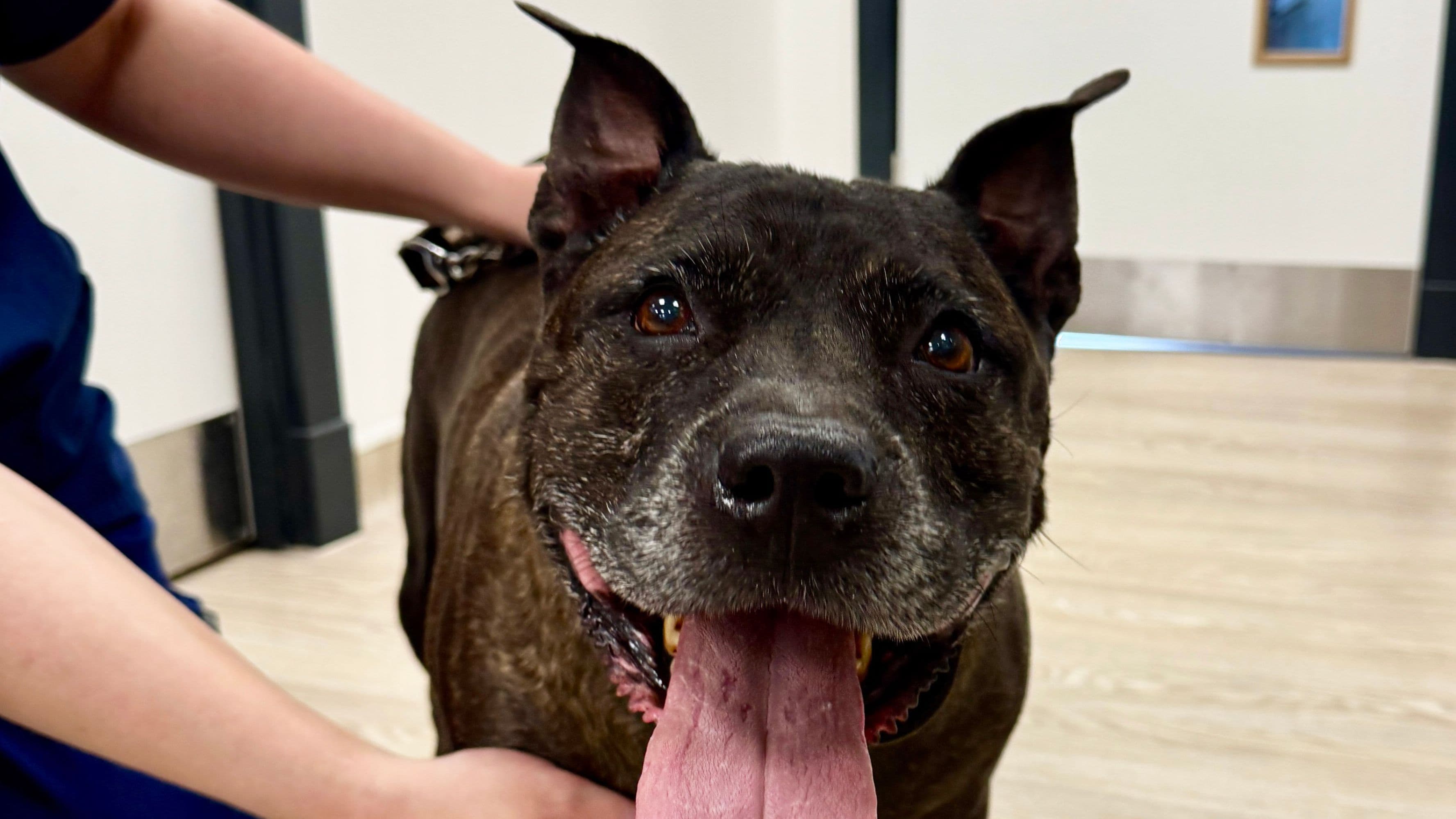
KJ's Story: Surgery to Remove Painful Bladder Stones
When 11-year-old Staffordshire Bull Terrier KJ was referred to Animal Trust Vets Warrington, he was experiencing urinary problems that needed further investigation. Our veterinary team carried out X-rays, which revealed multiple small bladder stones lodged in the neck of KJ's bladder. Bladder stones can cause pain, irritation and difficulty passing urine. In some cases, they can block the flow of urine completely, creating a life-threatening emergency that requires immediate treatment.
Diagnosing the Cause
Following a thorough examination, diagnostic imaging confirmed that several bladder stones were causing KJ's urinary symptoms. Identifying the stones allowed our team to plan the most appropriate treatment to relieve his discomfort and reduce the risk of a urinary blockage.
Surgery to Remove the Bladder Stones
Our team performed a cystotomy – a surgical procedure that involves opening the bladder to remove the stones safely. All of KJ's bladder stones were removed. Removing the stones should help relieve his symptoms and reduce the risk of future complications. We wish KJ a smooth and comfortable recovery.
What Are Bladder Stones?
Bladder stones (also known as uroliths) are hard, mineral deposits that form within the bladder. They can vary in size and number and may irritate the bladder lining, causing inflammation, pain and difficulty urinating. Without treatment, bladder stones can obstruct the urinary tract, preventing a pet from passing urine. A complete urinary blockage is a veterinary emergency and requires urgent treatment.
Signs Your Pet May Have Bladder Stones
If your dog or cat has bladder stones, you may notice:
Passing small amounts of urine frequently
Blood in the urine
Signs of pain or discomfort while urinating
Frequent accidents in the house
Licking around the urinary area more than usual
When to Seek Veterinary Advice
If your pet is struggling to urinate or cannot pass urine at all, seek veterinary advice immediately. A urinary blockage can quickly become life-threatening and requires urgent treatment. At Animal Trust Vets, our experienced veterinary teams are here to help diagnose and treat urinary conditions, including bladder stones, helping pets like KJ get back to feeling their best.