Getting portions right
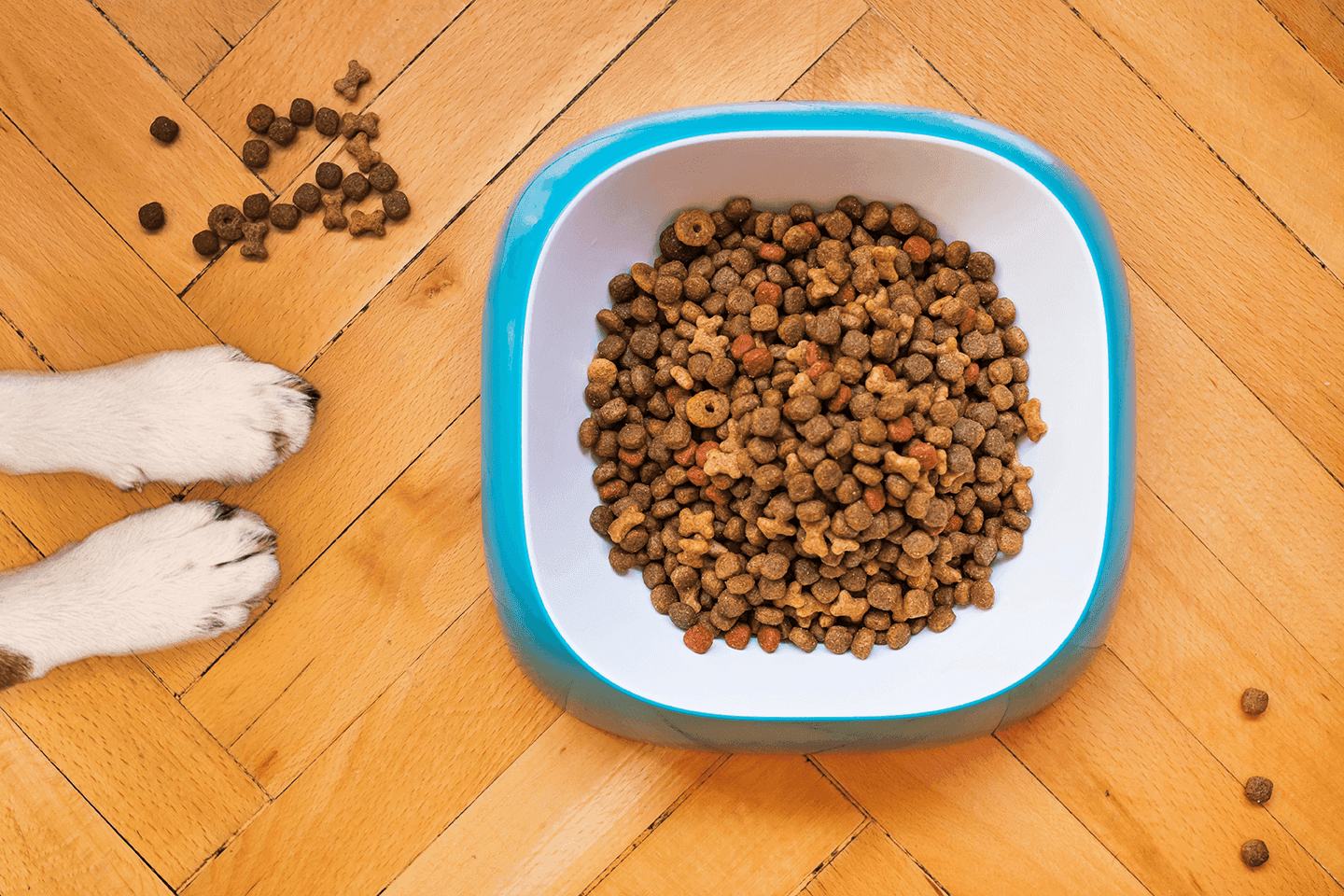
Use the feeding guide on the packet as a starting point. Read it carefully, as puppy portions usually depend on age and expected adult size. Adjust portions according to your dog’s growth, weight and body condition, with advice from your veterinary team if needed.
Weigh food using kitchen scales. If you mix wet and dry food, combine appropriate portions rather than feeding the full daily allowance of each.
You should be able to feel your dog’s ribs easily without a thick covering of fat and see a waist when looking from above. Your veterinary team can show you how to assess their body condition.
Include treats, chews and table scraps in the daily calorie allowance. These should generally provide no more than 10% of daily calories, with the rest coming from complete food. You can also use some of their usual food for training rewards.
If your dog needs to lose weight, ask your veterinary team for a feeding plan rather than simply cutting their food substantially.
Changing your dog’s food
Introduce new food gradually over about a week, unless your vet advises otherwise. Start by mixing a little into their current food, then increase the proportion of new food while reducing the old.
Some dogs need a slower transition. Speak to your veterinary team if your dog develops persistent vomiting, diarrhoea or a reduced appetite.