Symptom: Blindness – When Should I Contact a Vet?
Signs my pet is having trouble seeing
Vision loss can develop gradually over weeks or months, or it can happen suddenly. While some pets adapt remarkably well to gradual blindness, sudden vision loss is a veterinary emergency and should be assessed immediately.
Common signs include:
Bumping into furniture, walls or other objects
Hesitating on stairs or when jumping
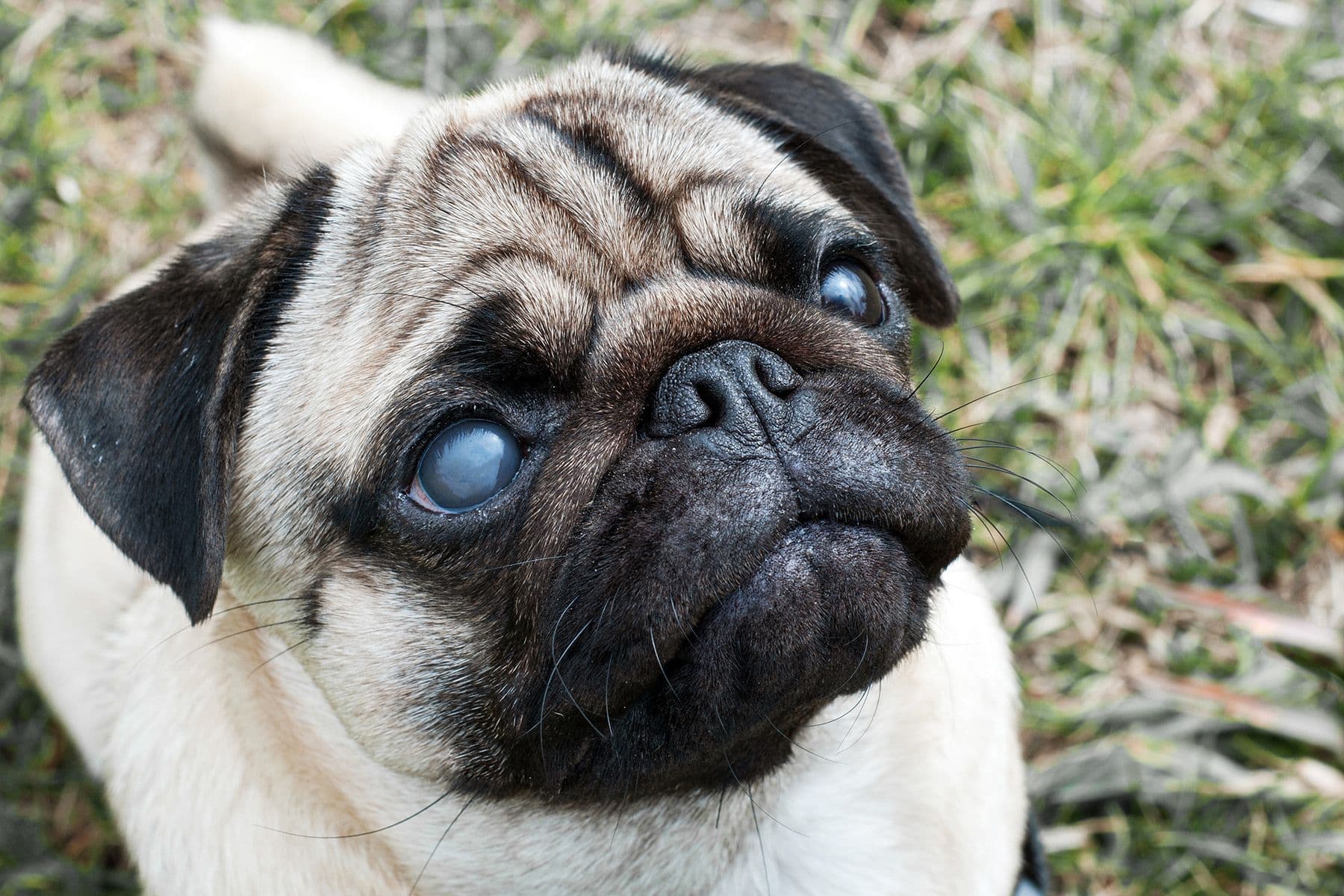
Cloudy, blue or white changes to one or both eyes
Redness, swelling or an enlarged eye
Being easily startled, confused or reluctant to move around unfamiliar places
Some pets may also have difficulty finding their food, water or favourite toys, particularly in unfamiliar surroundings. Any sudden change in your pet's vision or the appearance of their eyes should be checked by a vet without delay.
Frequently asked questions about blindness in pets
- Cataracts: the lens becomes cloudy, reducing the amount of light reaching the back of the eye.
- Glaucoma: increased pressure inside the eye can cause pain and permanent vision loss if not treated quickly.
- Retinal disease: conditions such as retinal detachment or progressive retinal atrophy (PRA) can lead to partial or complete blindness.
- Inflammation inside the eye (uveitis): this can affect vision and may be associated with underlying disease.
- Eye injuries or other eye diseases: trauma, corneal disease and tumours can all affect vision.
- If your pet has suddenly lost their vision, contact your vet immediately.
- Keep your home environment as familiar as possible. Avoid moving furniture, food bowls or your pet's bed.
- Guide your pet calmly using your voice and keep dogs on a lead when outside until they have been examined.
- Arrange a prompt appointment with your vet if you notice any gradual change in your pet's vision or the appearance of their eyes.
- Don't wait to see if your pet's vision improves on its own. Early treatment may help preserve their sight.
- Don't delay contacting your vet if your pet suddenly loses their vision or develops changes to the appearance of the eye.
- Don't let your dog off the lead or allow your pet unsupervised access to hazards until their vision has been assessed.
- Don't use eye drops or medications unless they have been prescribed by your vet for your pet's current eye problem.
Seek immediate veterinary attention if your pet:
- Suddenly loses their vision or appears to become blind.
- Has a painful, red, swollen or enlarged eye.
- Has suffered an eye injury or trauma.
- Develops a cloudy, blue or white eye suddenly.
- Has vision loss together with collapse, disorientation or other neurological signs.
Gradual vision loss is not usually an emergency, but it should always be checked by your vet, as some causes can be treated if detected early.
Written by Gillian Burkhill, Veterinary Surgeon, Animal Trust Vets CIC | Published July 2026 | Review date July 2029 | This advice is for UK pets only and is not a replacement for seeing a vet