
Symptom: Overgrooming in Cats – Why is my cat grooming so much?
Signs my cat is overgrooming
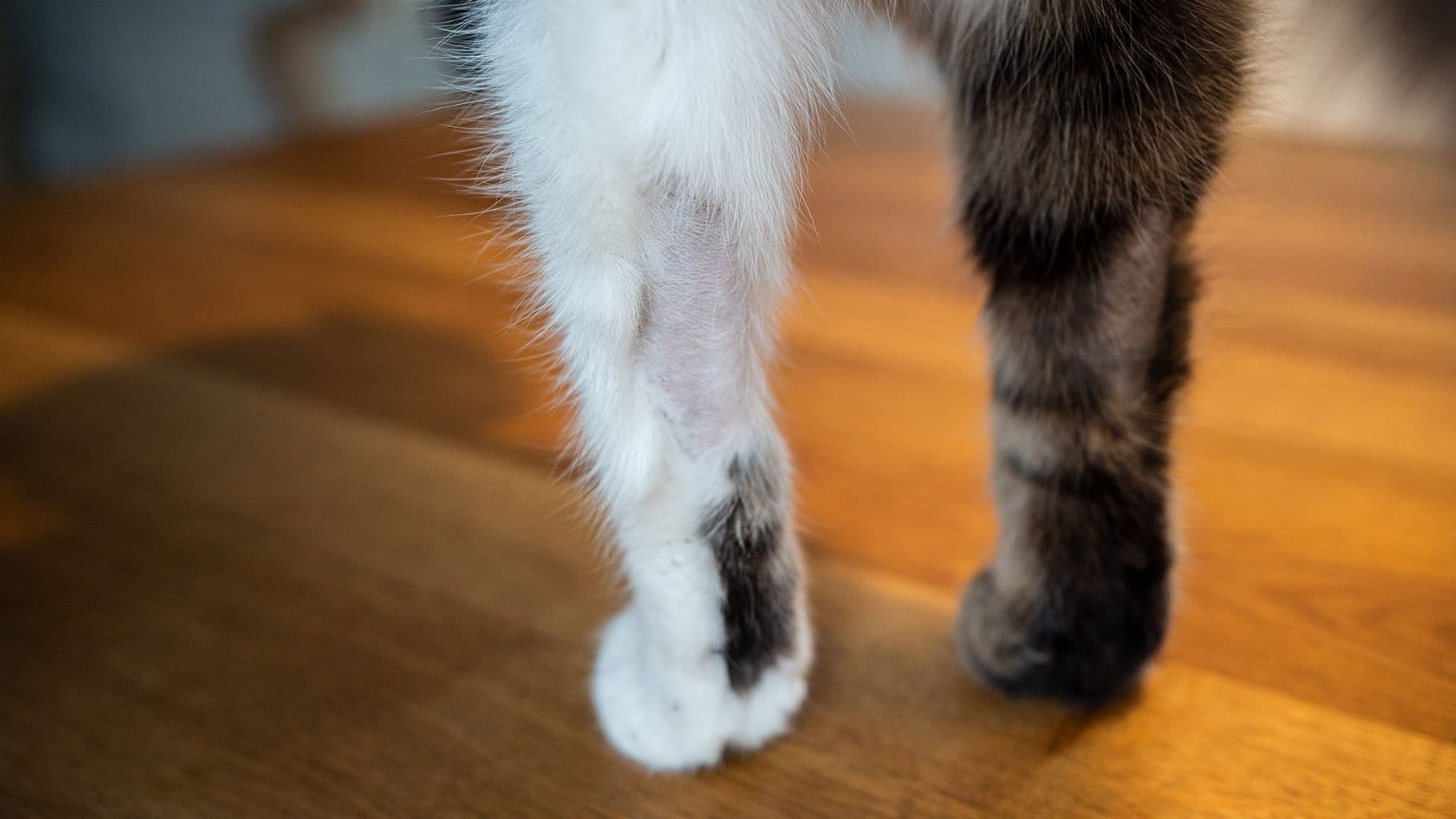
Cats naturally spend a lot of time grooming, so it can sometimes be difficult to recognise when grooming has become excessive. In many cases, the first sign owners notice is patchy hair loss rather than the grooming itself.
You may notice:
Areas of thinning fur or bald patches, often on the underside or sides of the abdomen, inner legs, or near the base of the tail
Very short, broken hairs that feel rough or stubbly rather than soft
Small scabs, sore patches, or irritated skin from repeated licking or chewing
Your cat repeatedly licking, chewing, or pulling at the same area of fur
More loose fur around the house or on bedding than usual
Hairballs appearing more frequently than normal
Some cats groom excessively when they are resting quietly or when no one is around, so the grooming behaviour itself is not always seen.
Often, the skin underneath looks normal because the hair has been licked out rather than falling out on its own. However, sometimes hair loss happens because the fur falls out rather than being groomed away. For example, fungal infections such as Ringworm can cause patches of hair loss and may spread to other animals or people.
Written by Gillian Burkhill, Veterinary Surgeon, Animal Trust Vets CIC | Published May 2026 | Review date May 2029 | This advice is for UK pets only and is not a replacement for seeing a vet
Frequently asked questions about overgrooming in cats
- Fleas or flea allergy
- Environmental allergies (such as dust mites or pollen)
- Stress or anxiety leading to excessive grooming
- Pain or discomfort in a particular area of the body
- Skin infections or parasites (such as mites)
- Make sure your cat is on a regular, effective flea treatment, even if you have not seen fleas
- Check your cat’s coat and skin regularly for new bald patches, scabs or irritation
- Try to reduce stress by keeping daily routines predictable and providing quiet resting areas
- Provide enrichment such as play, scratching posts and safe places to climb or hide
- Keep a note of when the grooming or hair loss started and whether it is changing
- Take photos if the affected areas spread or change, as this can help your vet monitor progression
- Don’t assume the problem is behavioural without ruling out medical causes
- Don’t use dog flea treatments or products not specifically designed for cats
- Don’t apply human creams, antiseptics, or oils to your cat’s skin
- Don’t ignore hair loss or overgrooming that continues or spreads
It’s a good idea to see your vet if:
- Hair loss is spreading or affecting multiple areas
- The skin looks red, sore, scabby or irritated
- Your cat seems itchy, uncomfortable or is grooming the same area repeatedly
- You’ve started flea treatment, but the problem is not improving
- You notice other changes, such as reduced appetite, weight loss, or changes in behaviour
Overgrooming and hair loss are common in cats, but the underlying cause is not always obvious at home. Your vet can help work out what is triggering the problem and recommend appropriate treatment.