

What is Anxiety in Dogs
Anxiety in dogs is a common behavioural condition that can affect dogs of all ages and breeds. It occurs when a dog feels fearful, stressed, or unable to cope with a situation, leading to changes in behaviour and body language.
In some dogs, anxiety is a condition in its own right, such as separation anxiety or noise phobia (for example, fear of fireworks or thunderstorms). In others, it can be a sign of an underlying problem, including pain, illness, or age-related changes.
One of the most common forms of anxiety in dogs is noise phobia, particularly related to fireworks or thunderstorms. These events can cause sudden and intense fear, even in dogs that are otherwise relaxed.
Dogs may develop anxiety for a range of reasons. Common triggers include being left alone, loud noises, unfamiliar environments, or past negative experiences. Some dogs are also more prone to anxiety due to their temperament or limited early socialisation.
Recognising anxiety early matters, as it can affect a dog’s welfare and quality of life. With the right support, many dogs can improve and cope better with situations that worry them.
Written by Gillian Burkhill, Veterinary Surgeon, Animal Trust Vets CIC | Published May 2026 | Review date May 2029 | This advice is for UK pets only and is not a replacement for seeing a vet

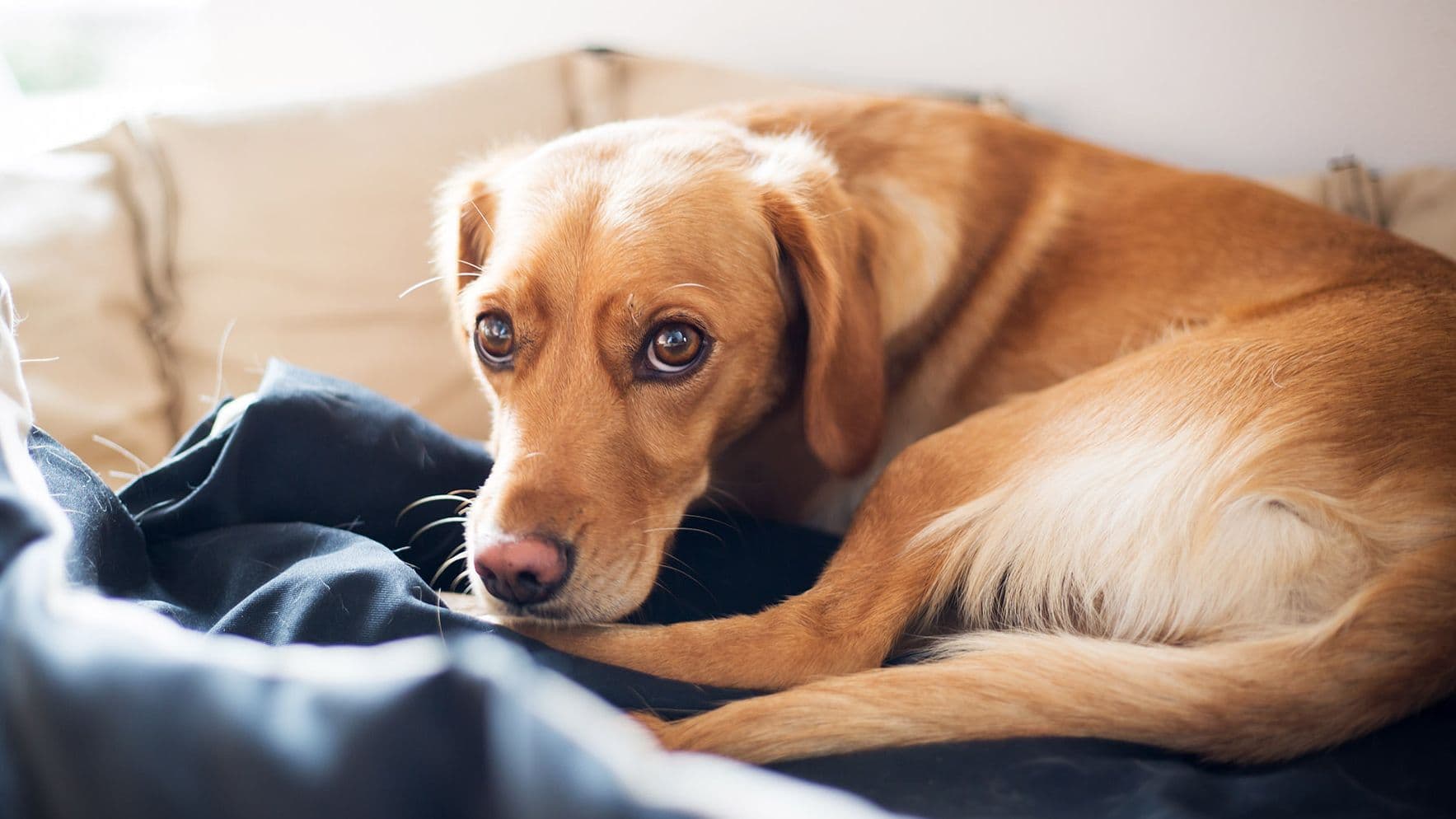
Symptoms of Anxiety in Dogs
Dogs show anxiety in different ways. Signs can range from subtle changes in body language to more obvious behavioural problems. They often appear when a dog is exposed to something they find stressful but may also be present more generally.
These signs are commonly seen during events such as fireworks displays or thunderstorms.
Common signs of anxiety in dogs include:
Behavioural changes
Vocalising, ie barking, whining, or howling
Pacing or restlessness
Destructive behaviour (for example, chewing furniture or scratching doors)
Trying to escape or hide
Toileting in the house
Clinginess or, in some cases, withdrawal
Body language and physical signs
Panting when not hot or exercising
Trembling or shaking
Lip licking or yawning when not tired
Ears pinned back, tucked tail, or a lowered body posture
Rasing paw
Dilated pupils or a wide-eyed expression
Excessive drooling
Some dogs show only mild signs, while others develop more severe behaviours, especially if their anxiety is ongoing or triggered frequently.
If your dog’s behaviour has changed suddenly, or their anxiety seems to be getting worse, speak to your vet.
When to contact your vet
If you think your dog may be anxious, it is sensible to speak to your vet, especially if the signs are new, severe, or getting worse.
You should contact your vet if:
Your dog’s behaviour has changed suddenly
The anxiety is increasing in frequency or severity
Your dog is showing signs of distress, such as panic, attempts to escape, or self-injury
There is destructive behaviour or toileting in the house, particularly when left alone
Your dog is older and showing new signs of anxiety or confusion
You are concerned there may be an underlying medical problem, such as pain or illness
Noise-related anxiety, such as fear of fireworks, can escalate quickly and may require prompt advice, particularly if your dog is at risk of injuring themselves or escaping.
Your vet will assess your dog’s health and behaviour to work out whether this is a behavioural condition or linked to another issue.
They may suggest further tests or refer you to a suitably qualified behaviourist if needed.
Diagnosis
Diagnosing anxiety in dogs involves assessing both behaviour and overall health.
Your vet will ask about your dog’s history, including:
When the signs started
What situations trigger the behaviour
What your dog does when anxious
Any recent changes in routine or environment
They will also carry out a physical examination to check for pain or illness that could be contributing.
Further tests may be recommended if there are concerns about an underlying medical condition, particularly if the behaviour has changed suddenly or your dog is older.
If no medical cause is identified, the anxiety may be diagnosed as a behavioural condition. Your vet will then discuss next steps or suggest referral to a qualified behaviourist.
Treatment of Anxiety in Dogs
Treatment for anxiety in dogs will depend on the cause, severity, and the individual dog. Most cases need a combination of approaches.
Behavioural and environmental support
Changes to your dog’s environment can help reduce anxiety and limit exposure to triggers. This may include:
Providing a safe, quiet space to retreat to
Reducing exposure to known triggers, such as loud noises
Keeping a consistent daily routine
Behaviour modification and training
Training can help dogs cope better with situations that make them anxious. This often involves:
Desensitisation, where the trigger is introduced gradually at a low level
Counterconditioning, helping your dog form a more positive association
These approaches are usually most effective with guidance from a qualified behaviourist.
Noise-related anxiety (for example, fireworks)
Noise phobia can cause sudden and severe anxiety, particularly during events such as Bonfire Night and New Year. Dogs may panic, attempt to escape, or injure themselves.
Planning ahead is important. This may include:
Creating a safe, quiet area in the home
Using background noise, such as a television or radio, to reduce sudden sounds
Ensuring your dog is not left alone during fireworks
Speaking to your vet in advance, as some dogs may benefit from medication during predictable events
Medication
For more severe anxiety, or where training alone is not enough, your vet may recommend medication. This can reduce anxiety levels and make training more effective. Medication is usually used alongside behavioural support rather than on its own.
Prevention of Anxiety in Dogs
It is not always possible to prevent anxiety in dogs, but some steps can reduce the risk and help dogs feel more confident.
Early socialisation: Introducing puppies to a wide range of people, places, sounds, and experiences in a positive and controlled way helps build confidence and reduce fear-related behaviours later in life.
Gradual exposure to new experience: Dogs benefit from being introduced to potentially stressful situations, such as being left alone or hearing loud noises, gradually and at a level they can cope with.
A regular routine for feeding, exercise, and rest helps dogs feel more secure.
Positive reinforcement training: Reward-based training builds confidence and strengthens the bond between dog and owner.
Avoiding punishment: Punishing an anxious dog can make fear worse and increase stress. Calm, supportive handling is more effective.
Some dogs will still develop anxiety despite good early experiences, particularly if they are naturally more sensitive or have had negative experiences.
Outlook
The outlook for dogs with anxiety varies depending on the cause, severity, and how early the problem is recognised.
Many dogs improve with the right support, particularly when training and environmental changes are introduced early. In some cases, medication can also help dogs cope and learn more effectively.
Anxiety is not always something that can be completely resolved. Some dogs remain more sensitive or prone to anxiety, and ongoing management may be needed.
Progress takes time, and setbacks can occur, especially if routines change, or new triggers are introduced. Consistency and patience are important.
With the right support, most dogs can achieve a good quality of life, even if some anxiety remains.