
Are Grass Seeds Harmful to Dogs? Risks & Prevention Guide
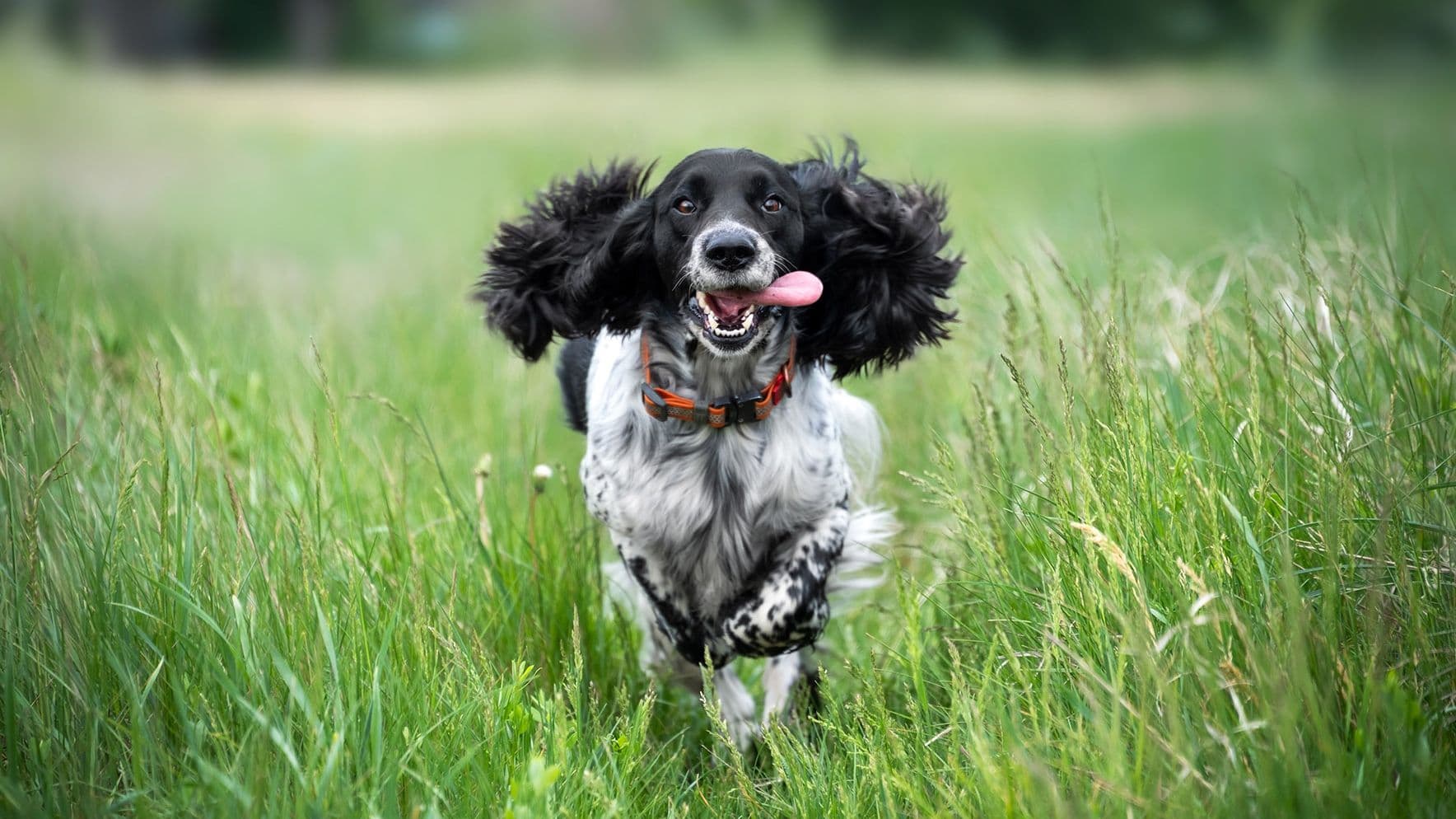
If your dog loves running through long grass, the chances are it will reappear covered in grass seeds. Grass seeds are small pointy seeds at the top of long grass stems and they are typically found in fields.
While they are generally harmless, if they find their way into the wrong places, they can cause severe problems for your pet. It is common to find grass seeds in ears, eyes, and toes, and if they are not removed, they can often get under the skin and potentially cause severe infection. They can also migrate into other areas of your pet’s body, causing problems that are difficult to diagnose.
Always check your dog over when it has been in long grass. The ends of the seeds are sharp, which is why they can pierce the skin. Check their eyes, ears, nose, armpits, and toes for any stuck in their coat. If you discover an embedded seed or a swelling that may contain one, book an appointment with your vet; do not try to remove it yourself. It is essential to act quickly before the seed can move.
Written by Dr. Mariella Robertson, Veterinary Surgeon, Animal Trust Vets CIC
Published December 2025 | Review date December 2028
This advice is for UK pets only and is not a replacement for seeing a vet
What are the signs my dog might have a grass seed stuck somewhere on their body?
Grass seeds often cause problems behind the eyelids, between the toes and in the ears. However, they can get under the skin anywhere on your pet’s body.
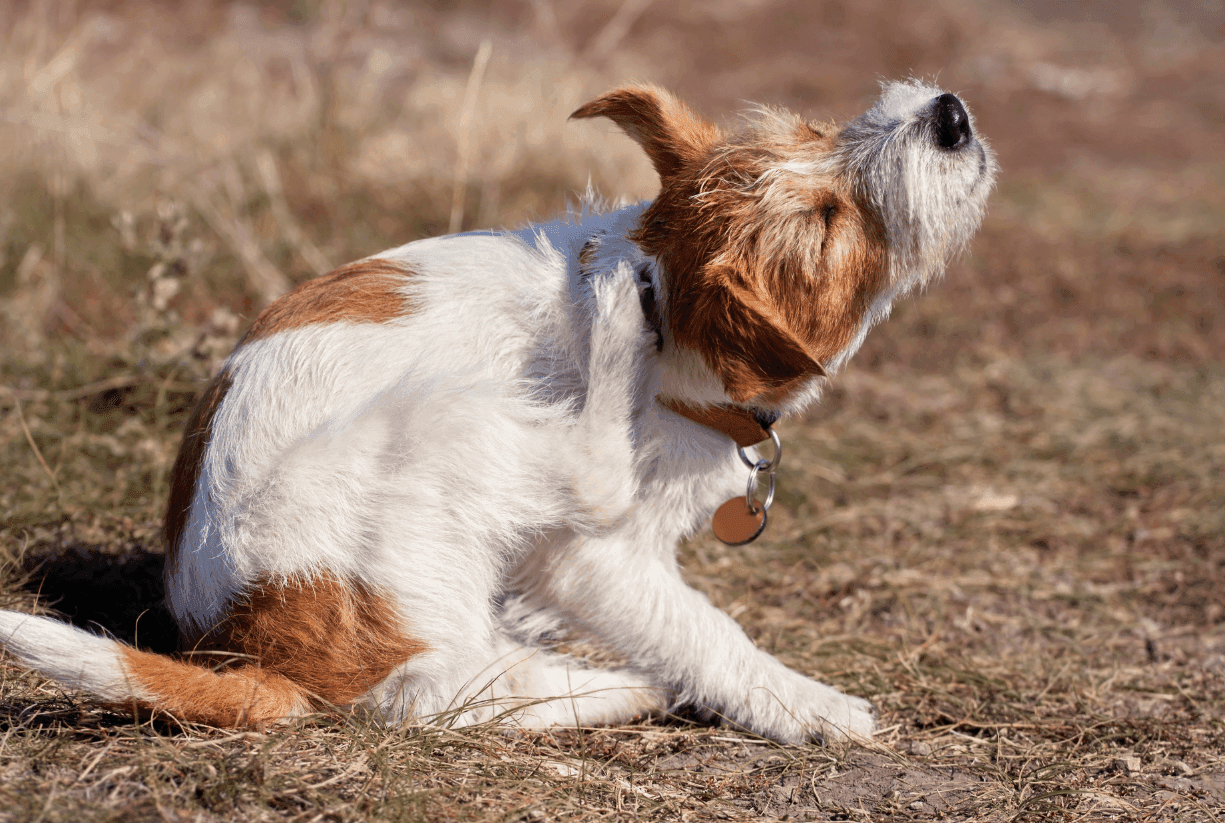
If your dog has a grass seed stuck in its ear, it will probably shake its head and scratch its ear.
If a seed has found its way under your pet's eyelid, its eye will probably look inflamed and watery and may have a discharge. If your pet is constantly licking and nibbling their paw or limping, check between their toes for any seeds.
If a seed travels more importantly into your pet's body, it will probably cause non-specific symptoms such as lethargy and intermittent high temperature.
What is the treatment if my pet has a grass seed stuck in their skin?
If your pet has a grass seed stuck in their skin, seek veterinary care immediately, especially if you cannot easily remove it yourself or if it has already started to burrow. Treatment will likely involve:
Manual removal, where your vet can use special tools to safely pull out a grass seed that is close to the surface.
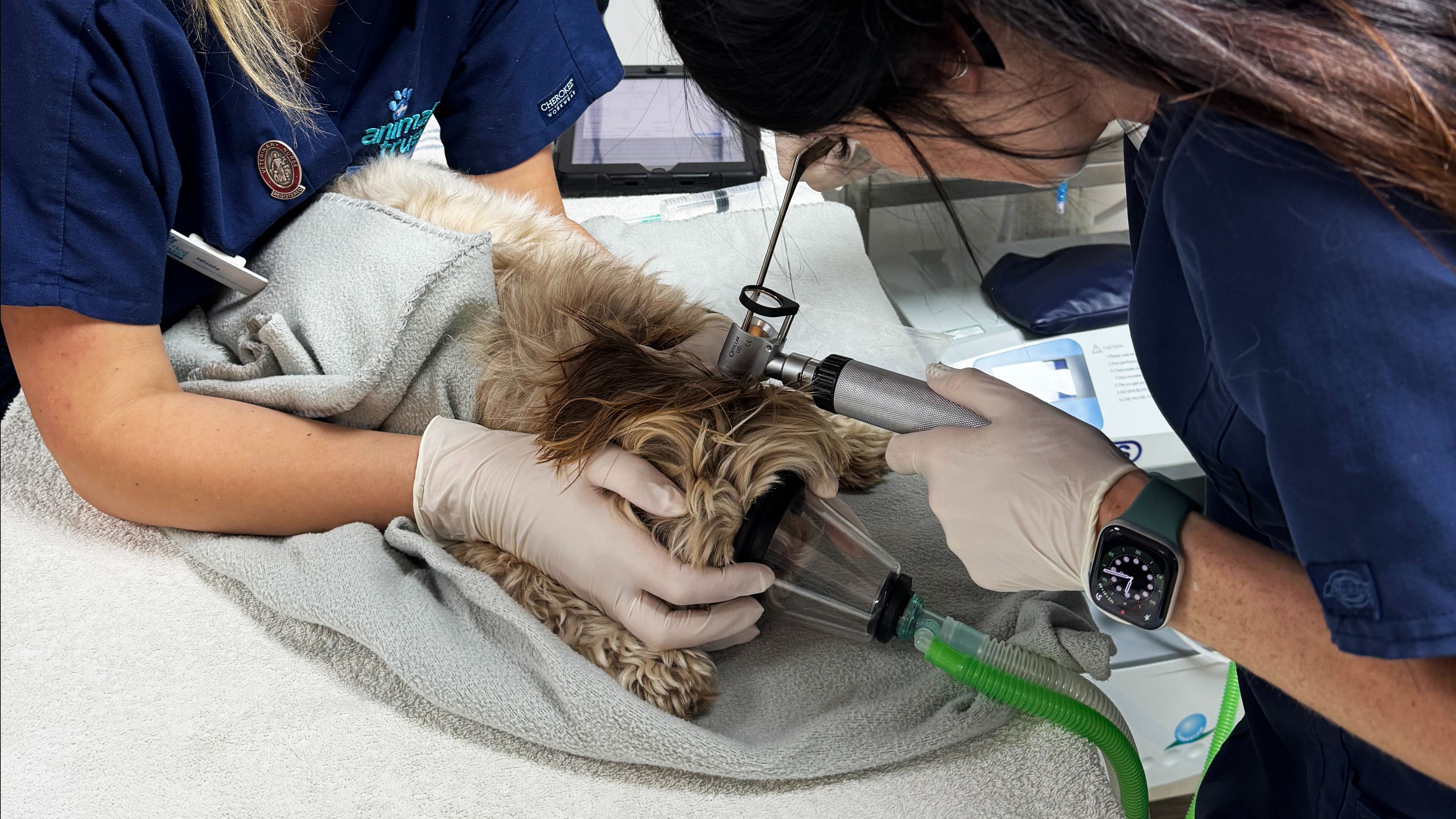
Sedation, if the seed is deep, in a sensitive area like the eye or ear, or causing significant pain, sedation might be necessary to ensure it can be removed completely and safely.
Advanced imaging, if the seed is difficult to locate, advanced imaging like a CT scan may be used to find it before removal. Grass seeds aren’t visible on X-rays.
Surgical exploration, when in some cases, is required to find and remove the seed, especially if the seed has been localised by a CT scan.
Aftercare, where your vet will provide guidance on wound care and may prescribe pain relief or antibiotics to prevent or treat infection.
How can I prevent grass seeds from causing a problem?
Avoid high-risk areas by staying away from fields and areas with tall or long grass, especially during peak seed seasons.
Keep fur trimmed, particularly around the paws, armpits, and ears, to prevent seeds from getting lodged.
Thorough inspection of your pet’s full-body inspection after every walk.
Remove any seeds if you find any, remove them carefully before they have a chance to burrow.
What is the cost of grass seed removal treatment?
The cost of treating grass seed problems can vary greatly depending on where they are and what damage they have caused. A straightforward removal, such as from the ear, is usually inexpensive, although it may still require an anaesthetic. However, the costs can be significant if CT scans and surgery are necessary.
Be open with your vet about your financial position. They are accustomed to discussing options with owners to keep costs as low as possible without compromising your pet’s health. Multiple treatment options may exist, so don’t be afraid to ask.