
Fleas in dogs are a common cause of skin disease, and some dogs develop an allergic reaction to flea bites. Affected dogs often show intense itching, particularly around the base of the tail, and may develop red, inflamed skin, scabs, or hair loss. Regular parasite control is essential, as fleas can live in the home environment as well as on your pet.
Animal Trust
10 Common Skin Conditions in Dogs: Signs and When to See a Vet
Understanding Why Dog Skin Conditions Are So Common
Skin conditions are one of the most common reasons dogs are brought to the vet. They can range from mild irritation to more serious disease and may indicate underlying issues such as allergies or infection. Left untreated, problems can quickly worsen.
Common Signs of Skin Disease in Dogs
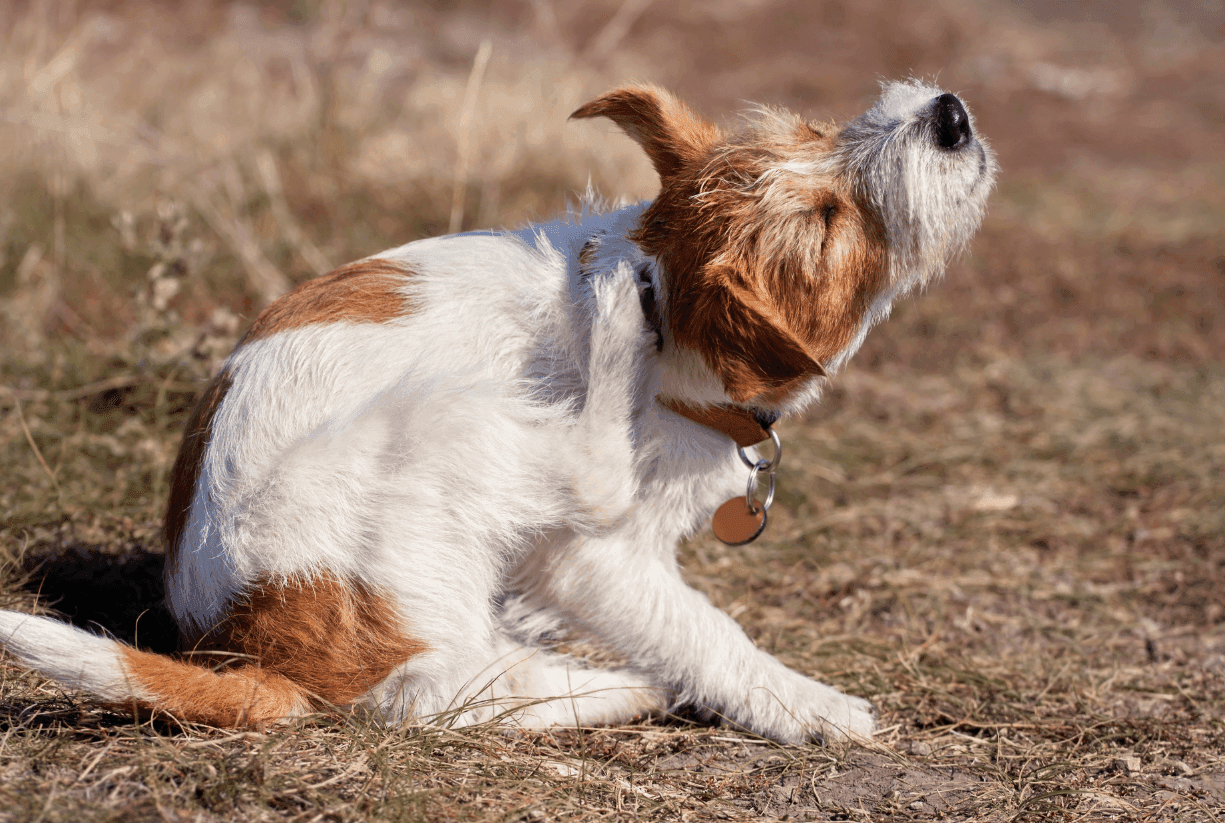
Occasional scratching is normal. Persistent or intense itching is not.
Dogs may also:
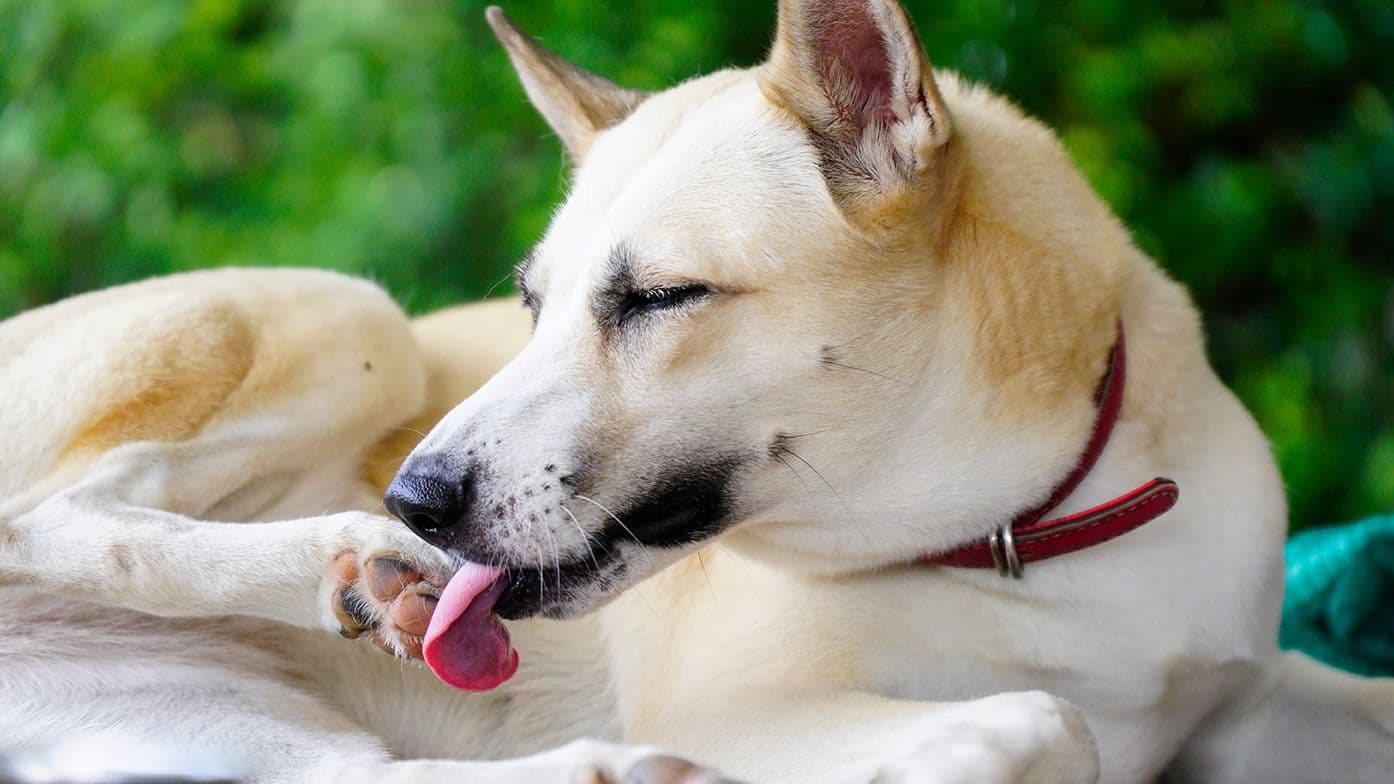
Lick, chew, or bite at their skin
Rub against furniture or the floor
Other signs to watch for include:
Redness or inflammation
Hair loss or bald patches
Rashes, bumps, or scabs
Dry, flaky, or greasy skin
Unpleasant odour
Sores or lesions
“Hot spots” (acute moist dermatitis)
When to See a Vet
If you notice persistent itching, skin changes, or anything unusual, it’s best to have your dog checked by a vet.
Early assessment can help identify underlying causes such as allergies, infections, or parasites before they become more serious.
Before your appointment, it can be helpful to note:
Any recent changes in diet or treats
When symptoms occur (e.g. after walks, seasonal patterns)
The type of symptoms (itching, hair loss, sores, etc.)
Any previous or ongoing health conditions
10 Common Skin Conditions in Dogs
Food allergies are usually triggered by proteins in the diet, most commonly beef, chicken, dairy, or eggs, although other ingredients can also be involved. Dogs with food allergies often show itching affecting the ears, feet, face, or rear end, and some may also have recurrent ear or skin infections. Diagnosis requires a strict elimination diet carried out over several weeks, under veterinary guidance, to identify the underlying cause.
Further reading: Atopic Dermatitis
Mange is a skin condition caused by mites living on or in the skin. The two main types are demodectic mange, which tends to affect young or unwell dogs, and sarcoptic mange, which is highly itchy and contagious. Signs include hair loss, redness, and intense itching, often affecting the face, ears, and legs. Treatment involves prescription medication to eliminate the mites and relieve inflammation.
Further reading: Demodectic Mange in Dogs, Sarcoptic Mange in Dogs
Bacterial skin infections (pyoderma) often develop secondary to underlying problems such as allergies or parasites. They may appear as small bumps, pustules, scabs, or areas of hair loss, and can cause significant irritation. Treatment usually involves antibiotics and medicated shampoos, alongside addressing the underlying cause.
Further reading: Bacterial Skin Infections Conditions page
Yeast infections commonly affect warm, moist areas such as the ears, paws, groin, and skin folds. Affected skin is often itchy, red, and may become greasy, thickened, and have a distinct unpleasant smell. Dogs will often lick, chew, or rub the area. Treatment usually involves topical or oral antifungal medication, along with managing any underlying cause.
Further reading: Yeast Infections Conditions page
Hot spots are localised areas of inflamed, infected skin that develop rapidly, often due to scratching, licking, or underlying irritation such as allergies or parasites. They appear as red, moist, painful patches of skin, sometimes with hair loss and discharge, and can worsen quickly if left untreated. Treatment usually involves clipping, cleaning, and medication to control infection and reduce irritation.
Further reading: Hot Spots on Dogs
Ringworm is a contagious fungal infection that can spread to other animals and humans. It typically causes circular areas of hair loss with crusting or scaling, often affecting the head, paws, ears, or front legs. Prompt veterinary treatment is important to clear the infection and reduce the risk of spreading.
Further reading: Ringworm Conditions page
Some dogs develop dry, flaky skin (dandruff), particularly in colder weather or if their skin is sensitive. In mild cases, this may be cosmetic, but it can also be associated with underlying issues such as allergies, parasites, or infection. If dandruff is persistent or accompanied by itching or hair loss, a veterinary check is recommended.
Further reading: Dandruff and Dry Flay Skin Symptom
Autoimmune skin diseases occur when the immune system mistakenly attacks the body’s own skin. They can cause persistent sores, crusting, or wounds that do not heal, often affecting areas such as the nose, around the eyes, or the paws. Although less common, these conditions can be serious and require prompt veterinary investigation and ongoing treatment.
Further reading: Autoimmune Skin Disease in Dogs Conditions page
Author
Written by Gillian Burkhill, Veterinary Surgeon, Animal Trust Vets CIC | Published October 2026 | Review date October 2029 | This advice is for UK pets only and is not a replacement for seeing a vet