
What is Yeast Skin Infections in Dogs
Yeast skin infections are a common cause of itching, redness and discomfort in dogs. They occur when yeast, usually Malassezia, which normally lives harmlessly on the skin, overgrows and causes inflammation. These infections often affect the ears, paws, skin folds, armpits and groin, and may develop secondary to allergies, underlying skin disease or other health problems. Yeast skin infections are not contagious to other pets or people. With proper diagnosis and treatment, most yeast infections can be managed successfully.
Written by Gillian Burkhill, Veterinary Surgeon, Animal Trust Vets CIC | Published May 2026 | Review date May 2029 | This advice is for UK pets only and is not a replacement for seeing a vet

Symptoms of Yeast Skin Infections in Dogs
Dogs with yeast skin infections may show signs such as:
A musty or “yeasty” smell
Greasy or oily skin and coat
Itching or persistent scratching
Red, inflamed skin
Flaky or scaly skin
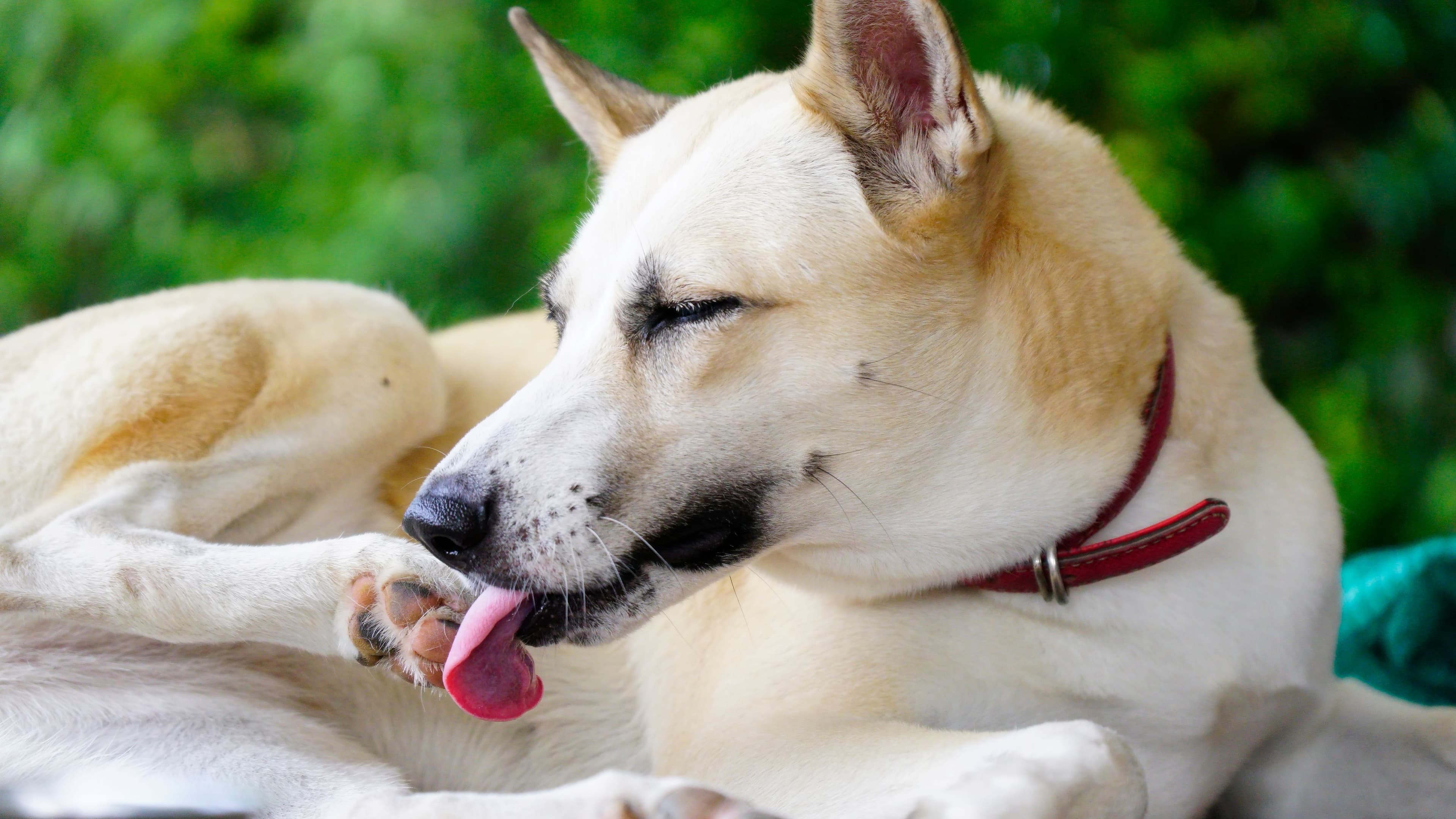
Licking or chewing at the paws
Recurrent ear problems
Darkened or thickened skin in long-standing cases
Yeast infections commonly affect the ears, paws, skin folds, armpits and groin.
When to contact your vet
Contact your vet if your dog is itchy, has a persistent yeasty smell, greasy skin, recurrent ear problems, or red, irritated skin that is not improving. Veterinary attention is especially important if symptoms keep returning, your dog seems uncomfortable, or the skin has become darkened, thickened or sore. Early treatment can help prevent more severe or chronic problems.
Diagnosis
Your vet will often suspect a yeast skin infection based on your dog’s history and skin changes, but tests are often needed to confirm the diagnosis. This may involve examining skin or ear samples, such as swabs or tape impressions, under a microscope to look for yeast organisms. Because yeast infections often develop secondary to problems such as allergies or hormonal disease, your vet may also investigate for an underlying cause.
Treatment of Yeast Skin Infections in Dogs
Treatment often involves medicated shampoos, wipes or ear treatments to reduce yeast overgrowth, and some dogs may need oral medication in more severe or recurrent cases. Just as importantly, any underlying cause, such as allergies, needs to be addressed to help prevent recurrence. Your vet will recommend treatment based on the severity and location of the infection.
Prevention of Yeast Skin Infections in Dogs
Preventing yeast skin infections often involves managing underlying causes such as allergies, keeping the skin and ears clean and dry, and treating flare-ups early. Regular veterinary check-ups and ongoing skin care may help reduce the risk of recurrence, especially in dogs prone to repeated infections.
Outlook
Most yeast skin infections respond well to treatment, especially when diagnosed early and any underlying cause is addressed. Some dogs may be prone to recurring infections and need long-term management, but with appropriate care, the outlook is generally good.