
Miliary Dermatitis in Cats (Small Scabs and Itchy Skin)
Miliary dermatitis is a skin condition in cats that causes many small scabs or crusty bumps to appear on the skin. Owners often notice scabs on their cat’s back or neck when stroking them or feel rough bumps beneath the fur.
These bumps often feel like small grains or seeds beneath the coat, which is where the name “miliary” comes from.
Miliary dermatitis is not a disease on its own. Instead, it usually develops when the skin reacts to an underlying problem such as fleas, allergies, parasites or infection.
The scabs generally found along the back, neck, and base of the tail, but they may also appear on the head or other parts of the body. Cats with miliary dermatitis are often itchy and may scratch, groom, or lick the affected areas more than usual.
Further reading: Common Skin Conditions in Cats
Written by Gillian Burkhill, Veterinary Surgeon, Animal Trust Vets CIC | Published May 2026 | Review date May 2029 | This advice is for UK pets only and is not a replacement for seeing a vet
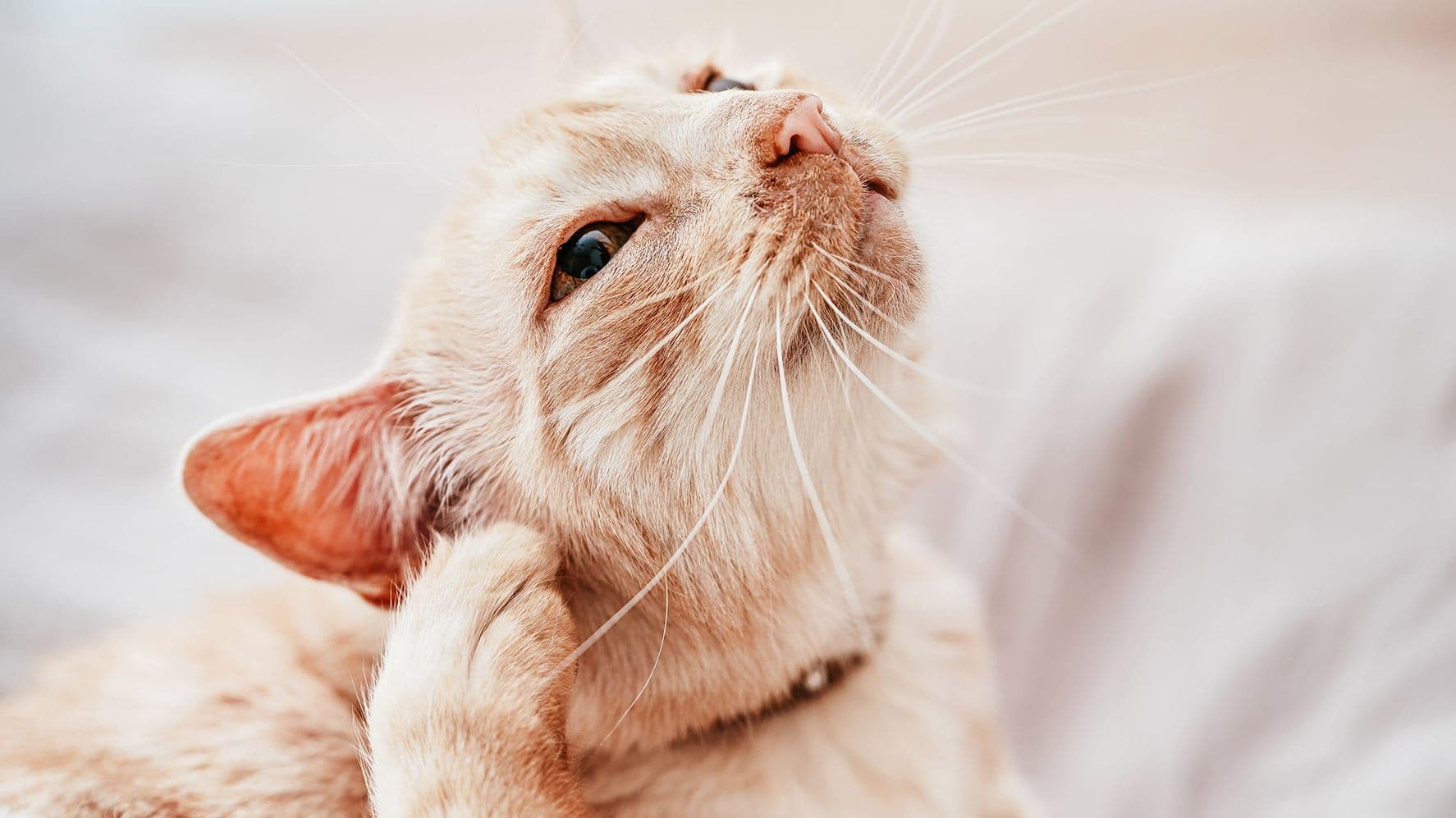
Miliary Dermatitis in Cats: Symptoms, Treatment and Prevention
Cats with miliary dermatitis develop many small scabs or crusty bumps on the skin. These can sometimes be easier to feel than see when you run your hand through your cat’s fur.
Common signs include:
- Numerous small scabs or crusts on the skin that feel like small grains or seeds beneath the fur
- Itching or scratching, which may be frequent or intense
- Increased grooming or licking
- Areas of hair loss
- Red or irritated skin beneath the scabs
- The scabs are most often found along the back, neck, shoulders, and base of the tail, but they may also occur on the head or other parts of the body.
You should contact your vet if you notice:
- Small scabs or crusty bumps on your cat’s skin
- Your cat scratching, grooming or licking more than usual
- Areas of hair loss or irritated skin
- Skin problems that do not improve after starting flea treatment
- Your cat seems uncomfortable or the skin problem is getting worse
Skin problems in cats often have an underlying cause, so a veterinary examination is usually needed to identify the trigger and recommend appropriate treatment.
Your vet will begin by asking about your cat’s symptoms, when the skin problem started, and any flea prevention your cat receives. Your cat will then have a physical examination, with a close look at the skin and coat.
As first steps, your vet may:
- Check carefully for fleas or flea dirt
- Look for signs of other parasites or skin infection
- Assess whether allergies or other skin conditions could be involved
- If needed, your vet may suggest further tests to help identify the underlying cause.
Treatment for miliary dermatitis focuses on addressing the underlying cause of the skin problem. Depending on what your vet finds, treatment may include:
- Flea treatment for your cat and other pets in the household
- Medication to help reduce itching and inflammation
- Treatment for skin infections if these are present
- Management of allergies, if these are suspected
Your vet will usually start by treating the most likely causes and monitoring how your cat responds.
Because miliary dermatitis usually develops in response to another skin problem, prevention focuses on reducing common triggers.
Helpful steps include:
- Keeping all pets in the household on regular, effective flea prevention
- Seeking veterinary advice early if you notice skin problems
Good flea control is particularly important, as flea allergy is one of the most common causes of miliary dermatitis in cats.
The outlook for cats with miliary dermatitis is usually very good once the underlying cause is identified and treated. If the condition is linked to allergies, long-term management may be needed to keep the skin comfortable and prevent flare-ups. With appropriate treatment, most cats can return to normal skin and coat health.