
Skin Mites in Cats
Why does my cat have flaky skin?
Skin mites are tiny parasites that can affect a cat’s skin and coat, causing irritation, inflammation and hair loss. In the UK, these conditions are generally uncommon, but several mite species may occasionally be encountered in veterinary practice.
Skin mite infections vary in severity depending on the type of mite involved and the individual cat’s health status. Some are acquired from the environment, while others are spread through close contact with infected animals or occur when a cat’s immune system is compromised.
Mites that may affect cats in the UK include:
Neotrombicula autumnalis (harvest mites) – seasonal mites picked up from grass or vegetation, typically affecting the paws, ears, and face in late summer and autumn
Cheyletiella species – surface mites that cause scaling and mild to moderate itching, sometimes described as “walking dandruff”, more often seen in multi-pet or rescue environments
Demodex species – uncommon mites associated with underlying illness or reduced immune function
Notoedres cati – a very rare mange mite in the UK, causing severe itching and crusting, usually starting around the ears and face
These conditions are diagnosed by a veterinary examination and may require skin sampling to confirm the presence of mites. Most cases respond well to appropriate parasite treatment and management of any secondary skin disease.
Further reading: Common Skin Conditions in Cats
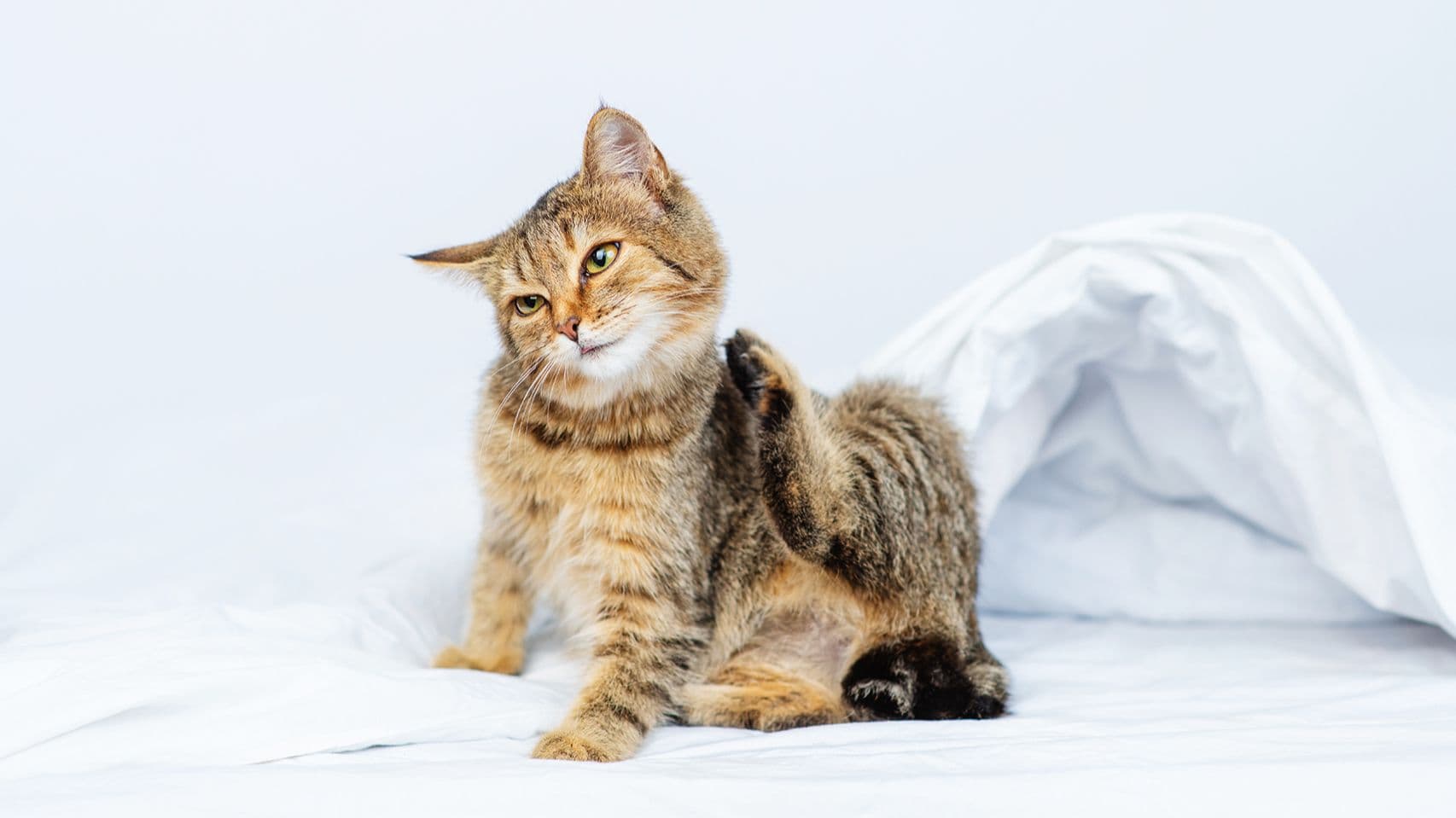
Skin Mites in Cats: Symptoms, Treatment and Prevention
Symptoms vary depending on the type of mite, but commonly include:
- Itching and scratching
- Hair loss or patchy coat
- Flaky or scaly skin
- Red or inflamed skin
- Crusting, often around the face, ears or neck
Some cats may also show more specific signs, such as flaking that appears to move through the coat, sometimes described as “walking dandruff” with Cheyletiella infections, or seasonal irritation affecting the paws, ears, or face with harvest mites.
You should contact your vet if your cat is scratching excessively, losing fur, or developing scabs, redness, or flaky skin. Skin conditions can look similar, so a proper diagnosis is important.
Early veterinary assessment helps identify the cause and start appropriate treatment before the condition worsens or spreads.
Skin mites are diagnosed based on a combination of clinical signs, examination findings and diagnostic testing. Your vet will examine your cat’s skin and coat and assess the pattern and severity of the problem.
In many cases, samples may be taken from the skin or coat to look for mites or eggs under a microscope. This can include skin scrapings, coat brushing, or tape samples, depending on the suspected cause. However, mites are not always easy to find, even when they are present. Your vet may recommend starting treatment based on the most likely diagnosis and your cat’s response to therapy.
Further testing or follow-up may be needed if the condition does not improve as expected or if another underlying skin disease is suspected.
Skin mites are usually treated with prescription parasite control medication, most commonly spot-on treatments. Your vet may also recommend tablets or injections depending on the type of mite and severity of disease. Your vet may also treat any secondary skin infection or inflammation. In multi-pet households, other animals may need treatment as well.
Most cats respond well once appropriate treatment is started, although some cases require a longer course depending on the mite involved.
Regular parasite prevention can help reduce the risk of skin mites. Avoiding contact with infected animals also reduces risk.
Routine veterinary check-ups can help detect skin problems early before they become more severe.
The outlook for cats with skin mites is generally good with appropriate treatment. Most cases improve once the mites are controlled and any secondary skin issues are managed.
Severe or long-standing infections may take longer to resolve, but full recovery is expected in most cats with veterinary care.
Written by Gillian Burkhill, Veterinary Surgeon, Animal Trust Vets CIC | Published May 2026 | Review date May 2029 | This advice is for UK pets only and is not a replacement for seeing a vet